info@gunther.co.uk

Hot Runner vs. Cold Runner Systems: Which Is Right for Your Injection Moulding Process?
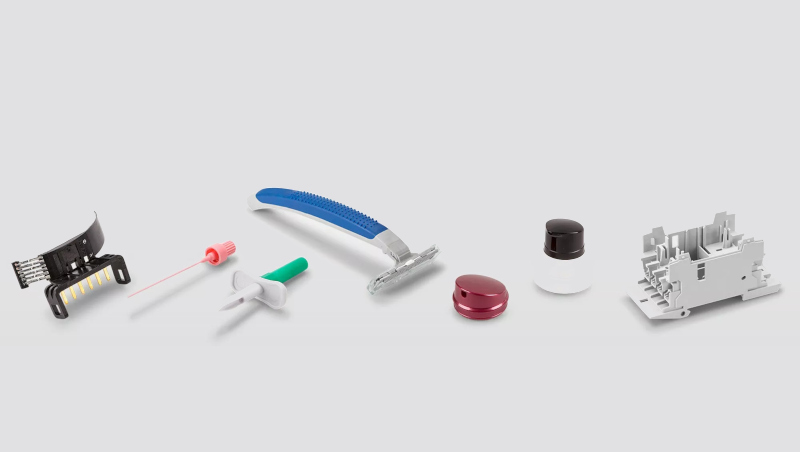
Hot runner or cold runner?
To remain competitive in a fast-moving technical injection moulding world a critical decision for any moulder is whether to use a hot runner system or a cold runner. There are of course many considerations but unless the production volumes are very low then the hot runner will usually give the greatest benefits. Hot runner systems are especially suited to the processing of high cost engineering polymers and/or high volume tools but the benefits extend further as shown below:
1. Material savings
Perhaps the most significant advantage of the hot runner system lies in the material savings. In a cold runner mould the material in the sub-runner and sprue cools and solidifies and is subsequently ejected and separated as waste material after each cycle. It is not uncommon for the sprue (waste), the part you are throwing away, to weigh more than the parts themselves. Although some applications may allow regrind material to be reused this in itself is an additional process and, of course, cost. In contrast the hot runner system constantly keeps material molten through the runner until it hits the cavity which ensures all material is used efficiently and without waste.
2. Faster cycle times
There is little doubt that hot runner systems significantly reduce cycle times compared to cold runner systems which is the second major benefit to consider. With a cold runner you have to wait for the runner and sprue to cool and solidify before ejecting the parts which is not the case with the hot runner system. The hot runner mould therefore can be opened earlier which leads to faster cycle times, higher production yield and increased profits.
3. Improved Part Quality
All hot runner systems offer more precise temperature and flow of the polymer which therefore leads to more consistent and higher quality plastic parts. Because of the improved condition of the melt common moulding defects like warping, sinking and poor surface finishes can usually be minimized or eliminated. Better gate vestiges can be achieved, particularly with the use of a valve gate system, and secondary operations are eliminated.
4. Design Flexibility
Hot runner systems offer the mould designer much greater flexibility when faced with challenging and complex moulds or multi-component (two-shot) applications. The higher end hot runner manufacturers offer many different types of solutions with small pitch centres, side gates and even nozzles positioned at angles to give maximum flexibility. The hot runner design will also be optimised for the best flow, correct shear rates and minimal pressure losses, features which all add to the control required for high tolerance moulded parts.
5. Energy efficiency
Although energy is required to heat and maintain the temperature in a hot runner system they can actually be more energy efficient overall. The cost of re-heating and then regrinding the cold runner and sprue can often be higher than the cost of operating the hot runner itself. Some hot runner manufacturers have energy efficient options, Gunther Hot Runner Systems for example have a range of nozzles with exclusive thick-film heating technology called BlueFlow® which can give energy savings of up to 50% compared to nozzles with the more common coil heaters.
6. Low environmental impact
The emphasis on protecting the world in which we live is a major consideration when looking at any manufacturing process. The material savings, higher yield, absence of reprocessing operations and energy savings all lead to a lower overall impact on the environment and more sustainable process when using a hot runner system instead of a cold runner.
Conclusion
Cold runner systems have their place for budget conscious low volume moulds with inexpensive polymers because of their low initial costs – the mould tool is often significantly cheaper for instance. Hot runner tools offer so many advantages though that the majority of moulds now are not even considered as a cold runner by many plastic processors. Technology from the major manufacturers is constantly developing and the market is likely to continue to grow in the foreseeable future.
What our clients say
We’ve used Gunther Hot Runner Systems, OptiMach special machining, and Knarr collapsible cores via Gunther UK for a number of years. The quality is always exceptional and the service is responsive and reliable.
New Tooling Manager
Major UK OEM
Gunther’s demonstrated technical knowledge allow us to confidently provide working, robust moulds that produce consistent parts. Delivering a quality product and incredible support are more important today than ever before, Gunther never fails to deliver this, which in turn helps us to provide the same service to our customers. I can’t recommend them enough.
UK Toolmaker/moulder
We’ve been working with Gunther UK since 1988, and they’ve never let us down. The combination of personal service, trustworthy advice, and consistently high-quality hot runner systems and mould components has cemented our relationship over three decades. They feel less like a supplier and more like a partner we can rely on.
Gary Statham
Neptune Injection
Sign up for our newsletter
Newsletter